
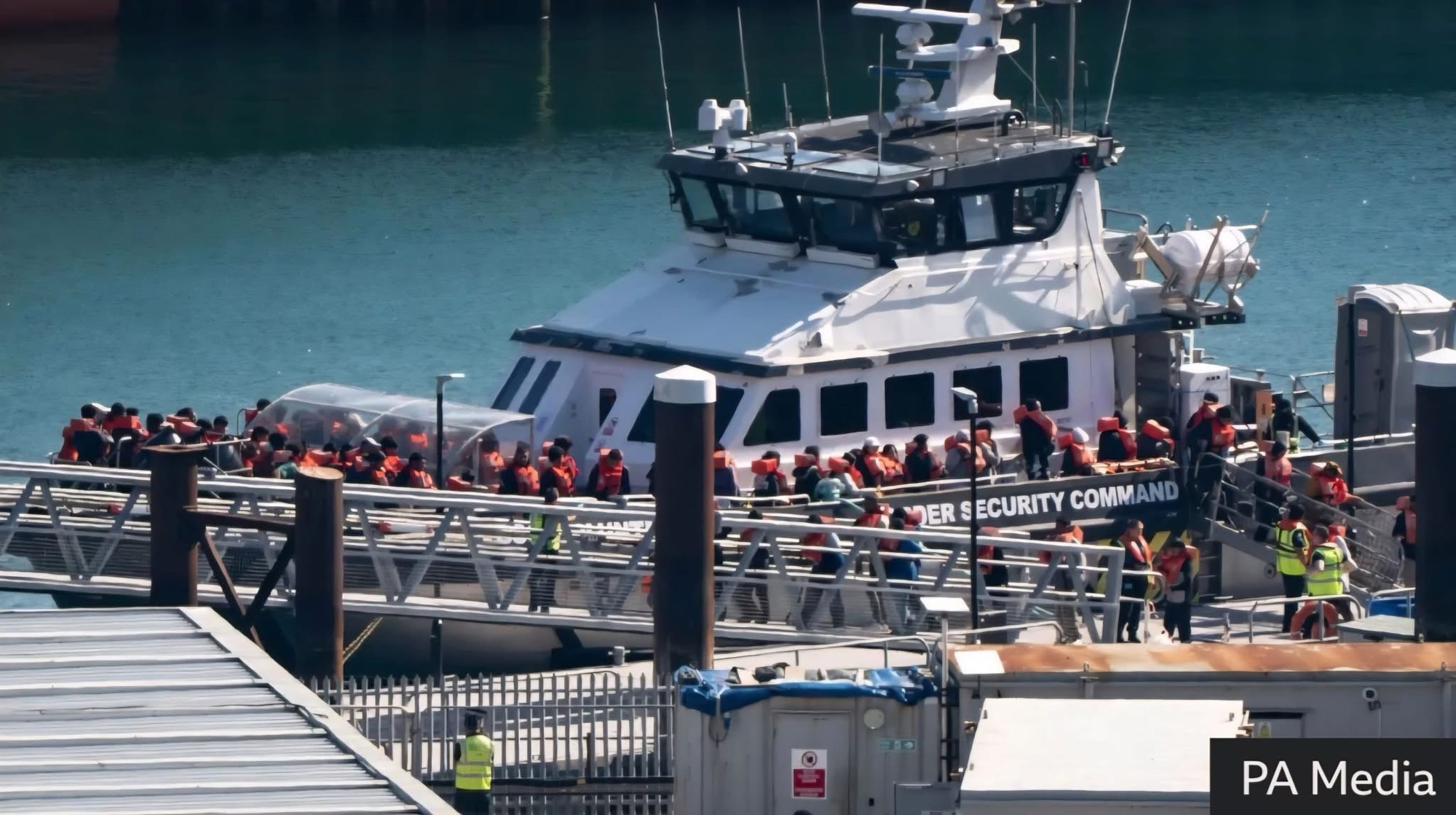
Three people, including a 10-year-old child, have died after an inflatable boat carrying migrants attempting to cross the English Channel got into difficulty off the northern French coast.
French authorities received a distress call in the early hours of Monday after the boat, carrying around 105 people, encountered problems off Wissant in the Pas-de-Calais region.
Two women and a 10-year-old child were among those who died. Emergency teams were deployed to the scene and dozens of people were reportedly injured during the incident.
Boat carrying more than 100 people
The vessel was an inflatable dinghy carrying approximately 105 people when it ran into trouble.
The incident occurred off Wissant, a coastal village between Calais and Boulogne-sur-Mer. The area is frequently used by organised criminal networks facilitating attempts to reach Britain by sea.
French maritime authorities responded after receiving the distress call and emergency crews were involved in the rescue operation.
The deaths were reported by French authorities and confirmed by international media including The Guardian and Le Monde.
Another fatal incident in the Channel
The latest deaths come only days after three bodies were reportedly recovered following another attempted Channel crossing.
The incidents highlight the continuing dangers faced by people attempting to cross one of the world’s busiest shipping lanes in small, overcrowded and often unsuitable vessels.
The Channel is particularly hazardous because of its strong currents, busy commercial shipping traffic and cold water.
UK small-boat crossings remain a major border issue
The latest tragedy comes during a year in which thousands of people have continued attempting to reach Britain in small boats.
The latest official Home Office data available before Monday shows that 18,565 people had arrived in the UK by small boat during 2026 as of 24 September.
On 23 September alone, 781 people arrived in 10 boats — the highest number recorded on a single day so far this year.
The Home Office’s figures are provisional and can subsequently be revised.
Official figures also show that three boats carrying 150 people arrived on 21 September, followed by another three boats carrying 154 people the following day. One boat on each of those days reached the Kent coast without being intercepted.
Government response
The UK Government has made tackling organised immigration crime and Channel crossings a central part of its border-security policy.
The Home Office says Border Security Command is working with French authorities and other international partners to disrupt the organised criminal groups responsible for facilitating crossings.
The Government has also said that more than 48,000 attempted crossings have been prevented through UK-French cooperation and that the National Crime Agency has seized more than 1,100 boats and engines used by organised immigration crime groups since the election.
Those figures are government figures and represent the Government’s assessment of the impact of its enforcement activity.
The wider debate
The deaths are likely to renew debate over how Britain and France should respond to Channel crossings and the criminal networks organising them.
The Government’s position is that organised criminal gangs are exploiting vulnerable people by putting them into dangerous boats and that international cooperation is necessary to disrupt the networks behind the crossings.
At the same time, humanitarian organisations have repeatedly argued that people seeking protection need safer routes and alternatives to dangerous journeys.
The latest incident does not by itself change the UK’s immigration policy, but it underlines the human consequences of the continuing Channel crossing crisis.
Investigations and rescue operations are being handled by the French authorities, while UK authorities continue to work with France on preventing crossings and disrupting the criminal networks involved.
Sources
- The Guardian
- Le Monde
- UK Home Office
- UK Parliament
- Border Force
- National Crime Agency