
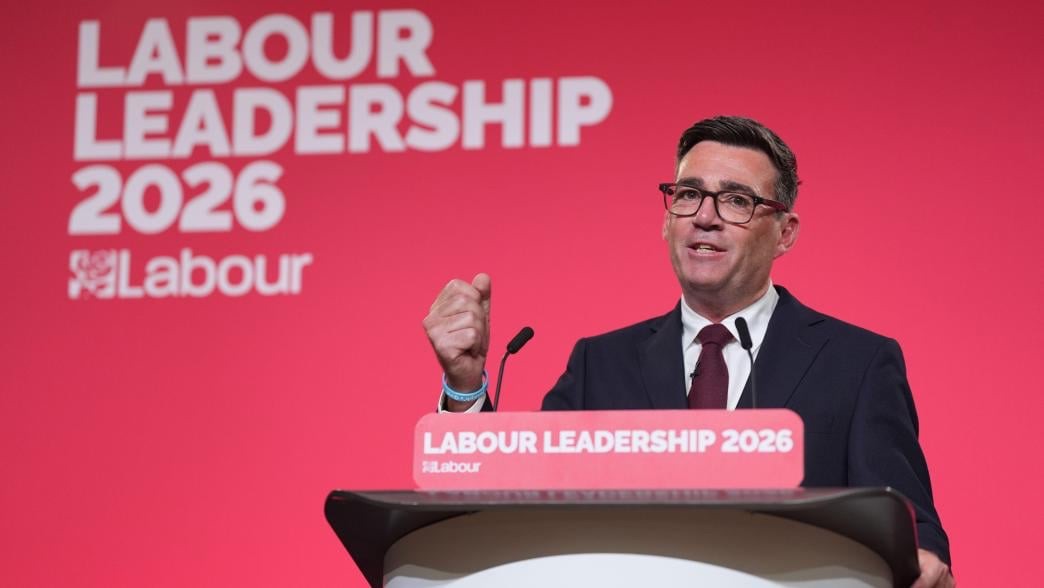
Labour’s annual conference is underway in Liverpool, with the party’s first conference under Prime Minister Andy Burnham producing a series of announcements on housing, social care, immigration, welfare, defence, industry, rail, young people and the economy. Here is a full roundup of the major developments from the opening of conference on Sunday 27 September through Monday 28 September.
Conference opens in Liverpool
Labour’s annual conference began in Liverpool on Sunday 27 September and runs until Wednesday 30 September.
It is the first annual conference since Andy Burnham became Labour leader and Prime Minister, following the change of leadership earlier this year.
The conference has been built around the slogan “Hope Again”, with Burnham presenting the event as an opportunity to set out a new direction for the country.
The major announcements have so far covered several areas of government, with ministers using their conference appearances to announce new policies as well as outline longer-term plans.
Burnham sets out plan for NHS-style social care
One of the biggest announcements came from Andy Burnham on the opening day.
The Prime Minister said he intends to take forward plans for an NHS-style social care system in England, with care eventually being free at the point of use.
Burnham said he was prepared to take difficult decisions, including tax rises, to fund the system.
However, he also made clear that the new system would not be introduced during the current Parliament.
Instead, he intends to develop the policy and put it before voters at the next general election.
Burnham said Labour’s existing manifesto commitments against increasing income tax, VAT or National Insurance mean there is currently limited room to introduce the system.
The proposal therefore represents a longer-term political commitment rather than an immediate change to social care.
New scheme for first-time buyers
The Government has also announced Your First Home, a new scheme designed to help first-time buyers purchase newly built homes.
Under the proposal, eligible buyers will be able to purchase with a 2.5% deposit, supported by a government equity loan worth 20% of the property’s value.
The scheme will initially have an interest-free period.
It will be targeted at first-time buyers who do not have access to financial help from family members.
There will also be household income and local property-price limits, with further details due to be announced at the October Budget.
Pre-registration is expected to open before the end of 2026.
Councils given greater powers over empty homes
Another housing announcement will give councils greater powers to bring long-term empty properties back into use.
The Government is reforming Empty Dwelling Management Orders.
The qualifying period for a property to become eligible for intervention is being reduced from two years to six months.
An EDMO allows a council to take over the management of a qualifying empty property and return it to residential use while the owner retains ownership.
The Government says the changes will allow councils to act more quickly and prevent properties from deteriorating while they remain vacant.
Under-16s to face social media restrictions from March
Culture Secretary Lisa Nandy announced at conference that the Government’s planned restrictions on social media for under-16s are expected to come into effect in March 2027.
The policy will prevent major social media services from providing their services to children under 16.
Additional restrictions will also apply to certain harmful online features for older teenagers.
The Government has previously said the regulations will require strong age verification and will also restrict features such as livestreaming and contact from strangers.
The measures are part of a wider package of online-safety reforms.
Avanti West Coast to be brought into public ownership
The Government announced that Avanti West Coast will be brought into public ownership from 7 March 2027.
The operator currently runs services between London and destinations including Birmingham, Manchester, Liverpool and Glasgow.
The Government says the change is intended to improve reliability and allow passenger services and railway infrastructure to be managed more closely.
It forms part of the wider creation of Great British Railways, with more passenger operators expected to move into public ownership as existing contracts expire.
New refugee resettlement route reopened
Home Secretary Shabana Mahmood announced the reopening of the UK Resettlement Scheme.
Around one quarter of referrals are expected to involve Afghan women and girls and Palestinian refugees.
Referrals will be made through established international organisations including the UN Refugee Agency.
The Government says first arrivals under the reopened scheme are expected before the end of 2026.
Three additional community-based safe and legal routes are also being developed, allowing communities, universities and eventually businesses to sponsor refugees.
The Government says the number arriving through these schemes will initially be in the hundreds before potentially increasing into the low thousands, with an annual cap.
Welfare reform moves back up the agenda
Work and Pensions Secretary Pat McFadden used his conference speech to signal significant changes to the welfare system.
He argued that the current system does not do enough to help young people move into employment and said Labour should not defend the existing system simply because it was created by previous Labour governments.
The Government is awaiting further reviews into support for young people and disability benefits.
McFadden said ministers will use those reviews to develop a new system focused more heavily on helping people into employment and training.
He also confirmed plans to guarantee jobs for some young people with disabilities and health conditions who are out of work.
No final package of welfare cuts or benefit changes has yet been announced.
Chancellor promises a “new age of industrialisation”
John Healey delivered his first Labour conference speech as Chancellor on Monday.
He used the speech to set out an economic strategy centred on manufacturing, skilled employment, exports and British industry.
Healey described the programme as a “new age of industrialisation” and said the Government wanted to use public investment to create jobs across the country.
He also stressed that the Government would maintain fiscal discipline, with his first Budget due on 28 October.
The Chancellor said the financial constraints facing the Government meant that Labour could not simply spend its way out of every problem.
130,000 jobs backed through National Wealth Fund
Healey announced that the National Wealth Fund’s existing capitalisation will be used to create and support 130,000 jobs across the UK by 2030.
The investment is expected to support sectors including:
- Artificial intelligence and technology
- Defence
- Clean energy
- Advanced manufacturing
The Government says the objective is to combine public investment with private-sector growth and create skilled employment across different parts of the country.
Union Learning Fund to return
The Chancellor also announced the return of the Union Learning Fund, with around £15 million a year being allocated to support training.
The programme is intended to help workers gain new skills, including skills needed to adapt to artificial intelligence and changes in the workplace.
The fund previously operated under Labour governments before being discontinued.
Britain to build new submarine docks
A major defence-industrial announcement was made alongside Healey’s economic programme.
Three new floating docks for the Royal Navy’s nuclear submarine service at HM Naval Base Clyde will be built through a UK-only competition.
The programme, known as Programme Euston, is intended to provide additional maintenance capacity for Britain’s nuclear submarine fleet.
The Government says the decision will support British shipbuilding and strengthen sovereign defence capability.
New British-built research vessel
The Government has also committed up to £115 million towards a new marine research vessel.
The ship will be built in Britain and is expected to enter service in the early 2030s.
It will be used to monitor Britain’s seas, including fish stocks, the seabed, pollution and marine incidents.
The Government says the project will support British shipyards while providing new scientific capabilities for managing Britain’s marine environment.
£5 billion export finance pilot
Another economic announcement is a new UK Export Finance pilot worth up to £5 billion.
The scheme is intended to make it easier for overseas buyers in fast-growing economies to purchase British goods and services.
Initial target markets include countries such as Brazil, Morocco and Mexico.
The Government says the programme could help British companies secure more international contracts and support jobs in the UK.
Defence spending and British industry
Defence Secretary Wes Streeting also used conference to argue that higher defence spending should generate benefits for British industry.
He confirmed plans for more defence contracts to be awarded to British companies where domestic industry can meet the requirements.
Streeting said defence investment would involve difficult choices but argued that strengthening Britain’s defence capabilities and industrial base were connected.
He also confirmed that the Government intends to maintain the state pension triple lock before the next general election.
Britain’s relationship with Europe
Foreign Secretary Ed Miliband used his conference appearance to argue for a closer UK relationship with the European Union.
He said Britain’s future depended on a stronger partnership with Europe across areas including trade, security and defence.
Miliband also discussed Britain’s future role in artificial intelligence and international cooperation.
The Government is expected to use Britain’s presidency of the G20 in 2027 to pursue international cooperation on AI safety and other global economic issues.
There has been no announcement of Britain seeking to rejoin the EU during this conference.
Labour’s position on Gaza and Israel
The Middle East has also featured heavily at conference.
Miliband said Labour had been right to change aspects of its approach to Gaza and said the Government would continue to push for Palestinian rights.
He argued that Britain should take a stronger international role in attempting to influence developments in Gaza and the West Bank.
The Government has also continued its sanctions policy against individuals involved in Israeli settlement activity.
The issue remains particularly sensitive within Labour, with pressure from sections of the membership for further action.
Protest outside the conference
The conference has also been accompanied by protests outside the Liverpool venue.
On Sunday, hundreds of people gathered in a demonstration supporting Palestine Action, which remains a proscribed organisation under UK terrorism legislation.
Police arrested protesters suspected of offences relating to displaying material in support of the organisation.
The arrests have triggered criticism from civil liberties groups, while police have said they were enforcing existing legislation.
The incident has added another layer to the debate around Gaza, protest rights and the Government’s approach to Palestine Action.
What has not yet happened?
Despite the large number of announcements, some of the most significant decisions have not yet been made.
The Chancellor’s first Budget under the new Government will take place on 28 October.
That is where further details are expected on the cost and funding of several policies, including the first-time buyer scheme.
Burnham’s major leader’s speech is also still to come, with the Prime Minister scheduled to address conference on Tuesday.
The conference itself does not finish until Wednesday 30 September, meaning further announcements and policy decisions are still possible.
The bigger picture
The first two days of Labour conference have established several themes for the new Government.
Burnham has placed social care and public services at the centre of his political agenda, while ministers have simultaneously emphasised tighter control of public spending.
Housing has featured through the first-time buyer scheme and new powers over empty homes.
Immigration policy has combined new legal refugee routes with continued efforts to reduce irregular migration.
The Chancellor has put industrial policy, British manufacturing, defence production and employment at the centre of his economic programme.
Meanwhile, the Government is signalling a more active role for Britain internationally, particularly around Europe, defence, Gaza and artificial intelligence.
However, many of the most consequential questions remain unresolved — particularly how the Government will pay for its commitments and what will be contained in the October Budget.
With two days of conference still remaining, the political direction is becoming clearer, but the detail of how many of these commitments will actually be delivered is still to come.
Sources
- UK Government / HM Treasury (GOV.UK
)
- UK Government / Home Office (GOV.UK
)
- UK Government / Department for Environment, Food & Rural Affairs (GOV.UK
)
- Department for Science, Innovation and Technology (GOV.UK
)
- Department for Transport
- Ministry of Defence
- UK Parliament
- Labour Party (Issuu
)
- BBC News
- Reuters
- The Guardian (The Guardian
)
- Sky News (Sky News
)
- The Independent (The Independent
)
- ITV News
- Merseyside Police